
Horses are among the most beloved animals in the world—known for their strength, beauty, intelligence, and companionship. Whether you’re a horse owner, a rider, or simply curious, one common question is: How long do horses live? The answer may surprise you. With proper care, modern horses are living longer than ever before.
In this guide, we’ll break down the average horse lifespan, the factors that affect how long horses live, the longest-living breeds, and tips for helping a horse live a long, healthy life.
Average Lifespan of Horses
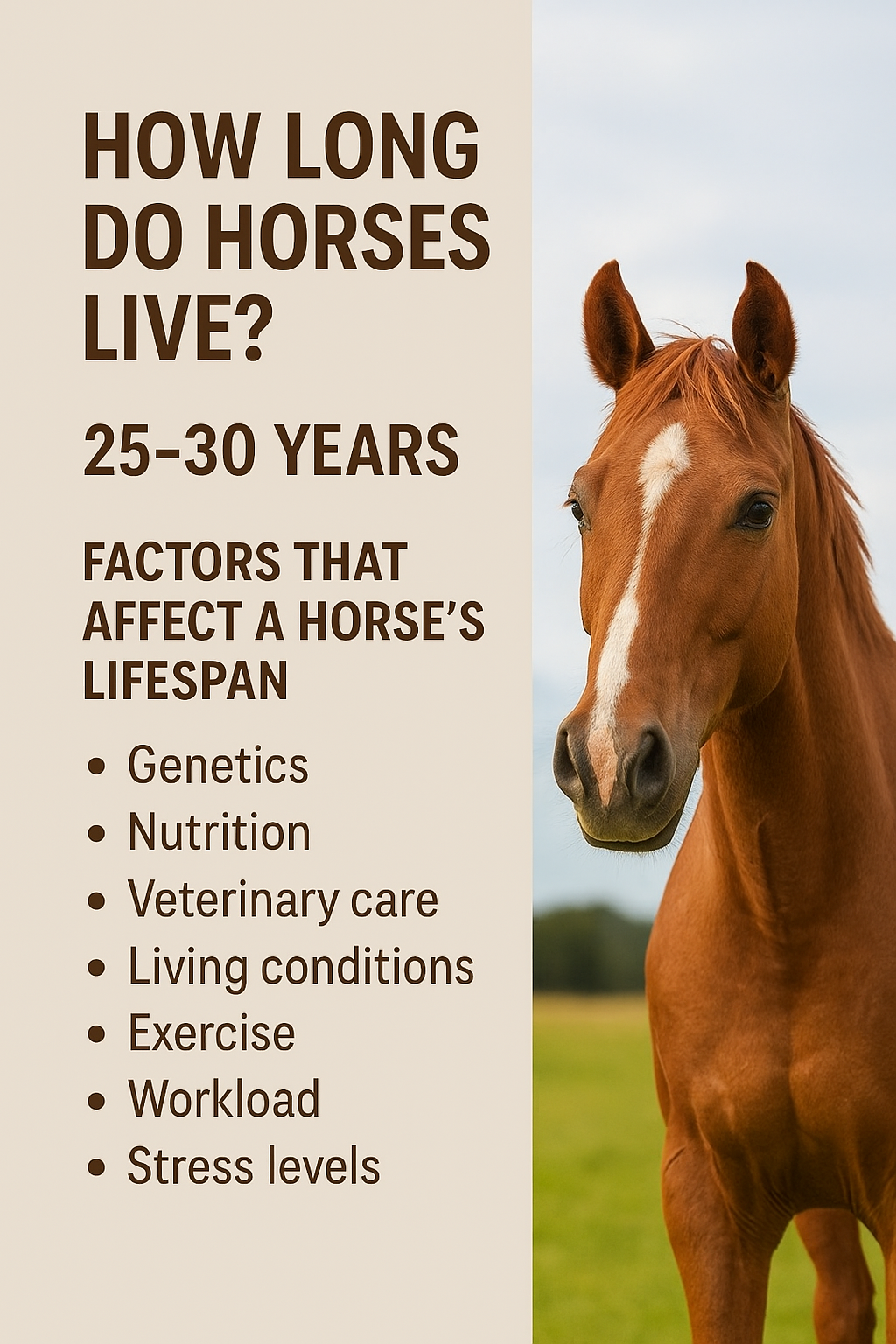
On average, horses live between 25 and 30 years.
However, many horses live well into their 30s, and some can even reach 40 years or more with excellent care.
Here’s a quick breakdown:
- Domestic horses: 25–30 years (average)
- Well-cared-for horses: 30–35 years
- Exceptional cases: 40+ years
- Wild horses: 15–20 years
Wild horses live shorter lives mainly due to predators, harsh weather, and limited food resources.
How Long Do Horses Live by Breed?
Different horse breeds have different genetic strengths, which means some naturally live longer than others.
1. Arabian Horse
- Average lifespan: 30–35 years
- Known as one of the longest-living horse breeds
2. Quarter Horse
- Lifespan: 25–30 years
- Very common and hardy
3. Miniature Horses
- Lifespan: 30–40 years
- Often outlive larger breeds due to fewer physical stressors
4. Thoroughbreds
- Lifespan: 20–28 years
- Racehorses often experience more physical strain
5. Draft Horses (Clydesdale, Shire, Belgian)
- Lifespan: 18–25 years
- Larger breeds tend to have shorter lifespans
6. Ponies
- Lifespan: 30+ years
- Ponies are hardy and long-lived
Factors That Affect a Horse’s Lifespan
Just like humans, a horse’s lifespan depends on many factors.
1. Genetics
Some horses are naturally healthier and sturdier due to strong genetic lines.
2. Nutrition
A balanced diet plays a huge role in a horse’s lifespan. They need:
- Quality hay
- Clean water
- Proper minerals
- Occasional supplements
Poor nutrition weakens immunity and shortens life expectancy.
3. Veterinary Care
Regular check-ups, dental care, deworming, and vaccinations help prevent disease and extend a horse’s life.
4. Living Conditions
Horses living in clean, safe environments with good shelter live significantly longer than those exposed to harsh or unsanitary conditions.
5. Exercise
Horses are active animals. Regular exercise:
- Improves heart health
- Maintains muscle
- Boosts mood
- Prevents obesity
6. Workload
Horses used for racing or heavy farm work experience more strain, which can reduce lifespan.
7. Stress Levels
Horses are sensitive creatures. Stress from poor training, isolation, or harsh treatment can negatively affect their health.
Signs a Horse Is Aging
As horses grow older, they begin to show physical and behavioral changes. Common signs of aging include:
- Graying around the eyes or muzzle
- Weight loss or difficulty maintaining weight
- Reduced energy
- Dental problems
- Joint stiffness or arthritis
- Vision or hearing decline
- Slower recovery after exercise
Recognizing these signs early helps provide proper senior care.
How to Help a Horse Live Longer
If you want to extend your horse’s life and ensure they stay healthy, here are essential tips:
1. Provide a Balanced Diet
Feed hay rich in nutrients, and avoid excessive grain unless advised by a vet. Older horses may need senior feeds that are easier to chew and digest.
2. Ensure Clean, Fresh Water
Hydration is critical. Horses drink 5–10 gallons of water per day, depending on size and temperature.
3. Dental Care
Horse teeth continue to grow throughout their lives. Annual dental exams prevent:
- Sharp points
- Difficulty chewing
- Weight loss
4. Maintain a Vaccination Schedule
Vaccinations protect horses from diseases like:
- Tetanus
- Influenza
- West Nile virus
5. Provide Comfortable Shelter
Horses need protection from extreme weather to avoid stress and illness.
6. Regular Exercise
Daily physical activity keeps them:
- Fit
- Happy
- Mentally stimulated
Even older horses benefit from light walking or turnout.
7. Monitor Weight
Obesity and extreme thinness both shorten a horse’s life. Regular body condition scoring helps maintain a healthy balance.
8. Emotional Well-Being
Horses are social animals. Companionship reduces stress and improves their quality of life. Horses living with other horses often live longer.
How Long Did the Oldest Horse Live?
One of the most famous long-lived horses is “Old Billy,” a British barge horse who lived to be 62 years old—the oldest recorded age for any horse.
Another example is Sugar Puff, a pony that lived to 56 years.
While these are exceptional cases, they show that with great care, horses can live far beyond the average lifespan.
How Long Do Horses Live Compared to Ponies?
Ponies generally live longer than full-sized horses because they experience less physical stress and are genetically hardy. Ponies commonly reach 30–40 years, whereas large draft horses may only live around 20 years.
When Is a Horse Considered Old?
Horses are typically considered seniors around:
- 15–18 years for larger breeds
- 20 years for smaller horses and ponies
However, many older horses stay healthy and active well into their 20s with proper care.
Final Thoughts
So, how long do horses live?
Most horses live 25–30 years, but with high-quality care, many can live into their 30s or even 40s. Factors like genetics, nutrition, environment, health care, and stress levels all influence lifespan. Whether you own a horse or simply love learning about them, understanding their needs helps ensure they enjoy a long, happy, and healthy life.