Time is part of our everyday lives—we check the clock when we wake up, when we go to work, and when we plan our schedules. But have you ever stopped and wondered: What does AM and PM stand for? Although we use these terms daily, many people don’t actually know what they mean or where they came from. This article explains everything you need to know in a simple, clear, and engaging way.
What Does AM Stand For?
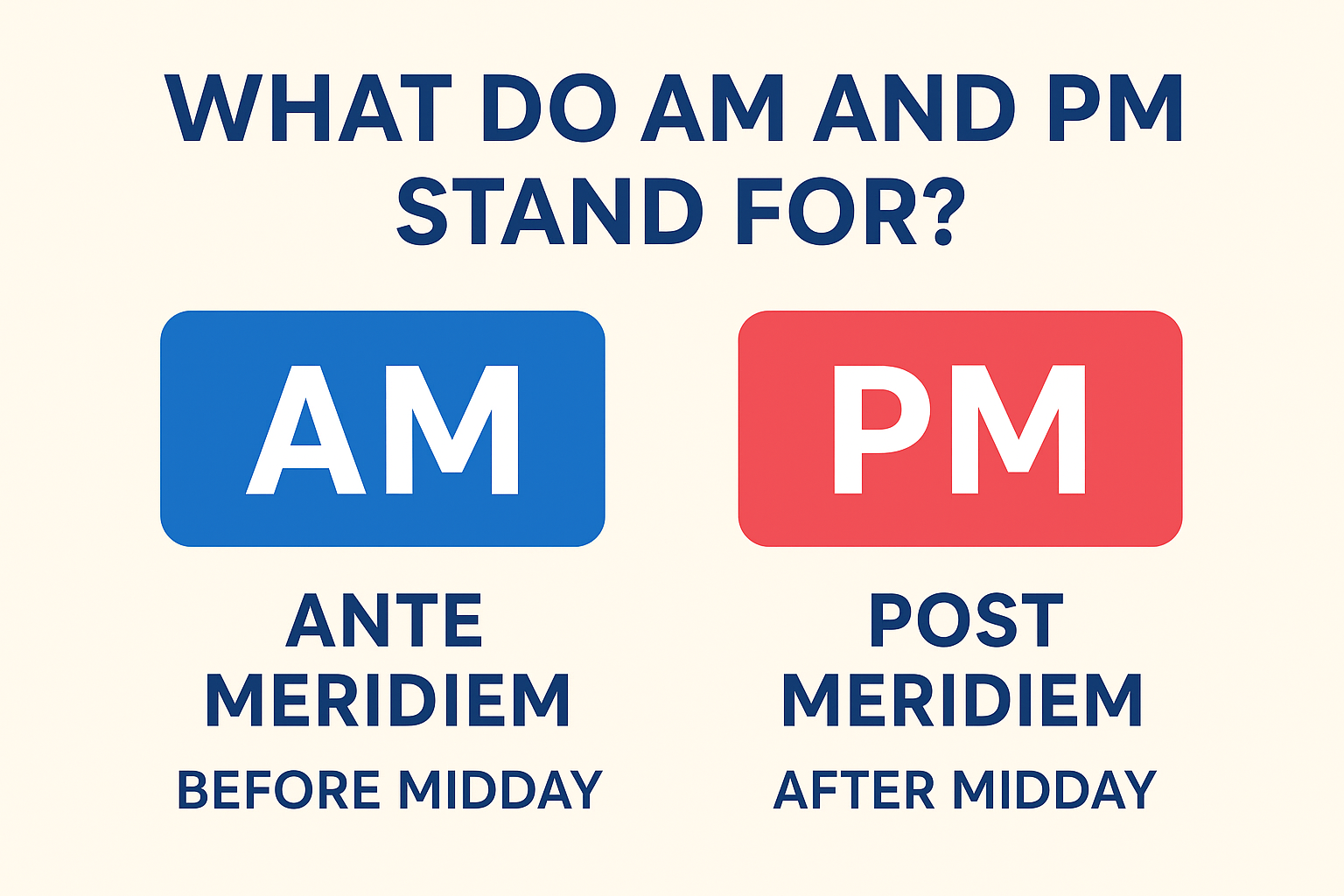
The abbreviation AM stands for “Ante Meridiem.”
- Ante means “before”
- Meridiem means “midday” or “noon”
So, AM translates to “before midday.”
This period includes all hours from 12:00 midnight (12 AM) until 11:59 in the morning (11:59 AM).
In simple terms, AM = late night + morning time.
What Does PM Stand For?
The abbreviation PM stands for “Post Meridiem.”
- Post means “after”
- Meridiem means “midday”
So, PM translates to “after midday.”
This includes all hours from 12:00 noon (12 PM) until 11:59 at night (11:59 PM).
In simple terms, PM = afternoon + evening + night.
Understanding the 12-Hour Clock System
The 12-hour system divides the day into two parts:
1. AM – Before noon (00:00 to 11:59)
Examples:
- 5:00 AM → early morning
- 10:30 AM → late morning
2. PM – After noon (12:00 to 23:59)
Examples:
- 3:00 PM → afternoon
- 8:45 PM → night
This is why the cycle repeats every 12 hours.
Why Do We Have AM and PM?
The AM/PM format is part of the 12-hour clock, which was developed thousands of years ago. The ancient Egyptians divided daytime and nighttime into two 12-hour periods using sundials and water clocks. This tradition continued into modern timekeeping.
Today, AM and PM help differentiate between morning and afternoon/evening in countries that use the 12-hour format—such as the United States, Canada, Pakistan, India, and the Philippines.
How Is It Different From the 24-Hour Clock?
The 24-hour format (popular in Europe and military time) does not use AM or PM.
Examples:
| 12-Hour Format | 24-Hour Format |
|---|---|
| 1:00 AM | 01:00 |
| 12:00 PM | 12:00 |
| 7:00 PM | 19:00 |
| 11:59 PM | 23:59 |
Both systems show time correctly, but the 24-hour clock avoids confusion—especially for travel, medical work, transportation, and aviation.
Common Confusions About AM and PM
1. Is 12:00 AM midnight or noon?
✔ 12:00 AM = Midnight
2. Is 12:00 PM noon or night?
✔ 12:00 PM = Noon
This is one of the biggest confusions people have!
Easy Trick to Remember AM & PM
Here is a simple way to never forget:
- AM = After Midnight
- PM = Past Midday
This helps you quickly link AM to morning and PM to afternoon/evening.
Why Understanding AM and PM Matters
Knowing what AM and PM stand for is essential because it helps avoid errors in:
- Travel bookings
- Medicine timings
- School and office schedules
- Event planning
- Public transportation
- Communication across countries
One small confusion can lead to big problems—like missing a flight or taking medicine at the wrong time!
Examples of AM and PM in Daily Life
AM Examples
- 6:15 AM → Wake-up time
- 9:00 AM → School starts
- 11:45 AM → Late morning snack
PM Examples
- 1:30 PM → Lunch time
- 5:00 PM → Evening tea
- 10:00 PM → Bedtime
Final Thoughts
The question “what does AM and PM stand for” may seem simple, but understanding it helps improve clarity in everyday life.
To recap:
- AM = Ante Meridiem = Before midday
- PM = Post Meridiem = After midday
These Latin terms divide the day into two equal 12-hour parts, helping us keep track of time easily and accurately.